A founder's calendar is a strategic asset
Most founders live in reactive scheduling — accepting every meeting request, leaving no time for deep work, and wondering why the week passed without moving anything important forward. Calendar management changes that.
This system is built on one core idea: your time is your most non-renewable resource. Every block on your calendar is a decision. My job is to make sure those decisions reflect your actual priorities — not just whoever had the boldest ask.
The rules that protect your time
Before anything lands on the calendar, it passes through a set of non-negotiable rules. These are agreed upon at kickoff and enforced consistently.
| Rule | What It Means | Why It Matters |
|---|---|---|
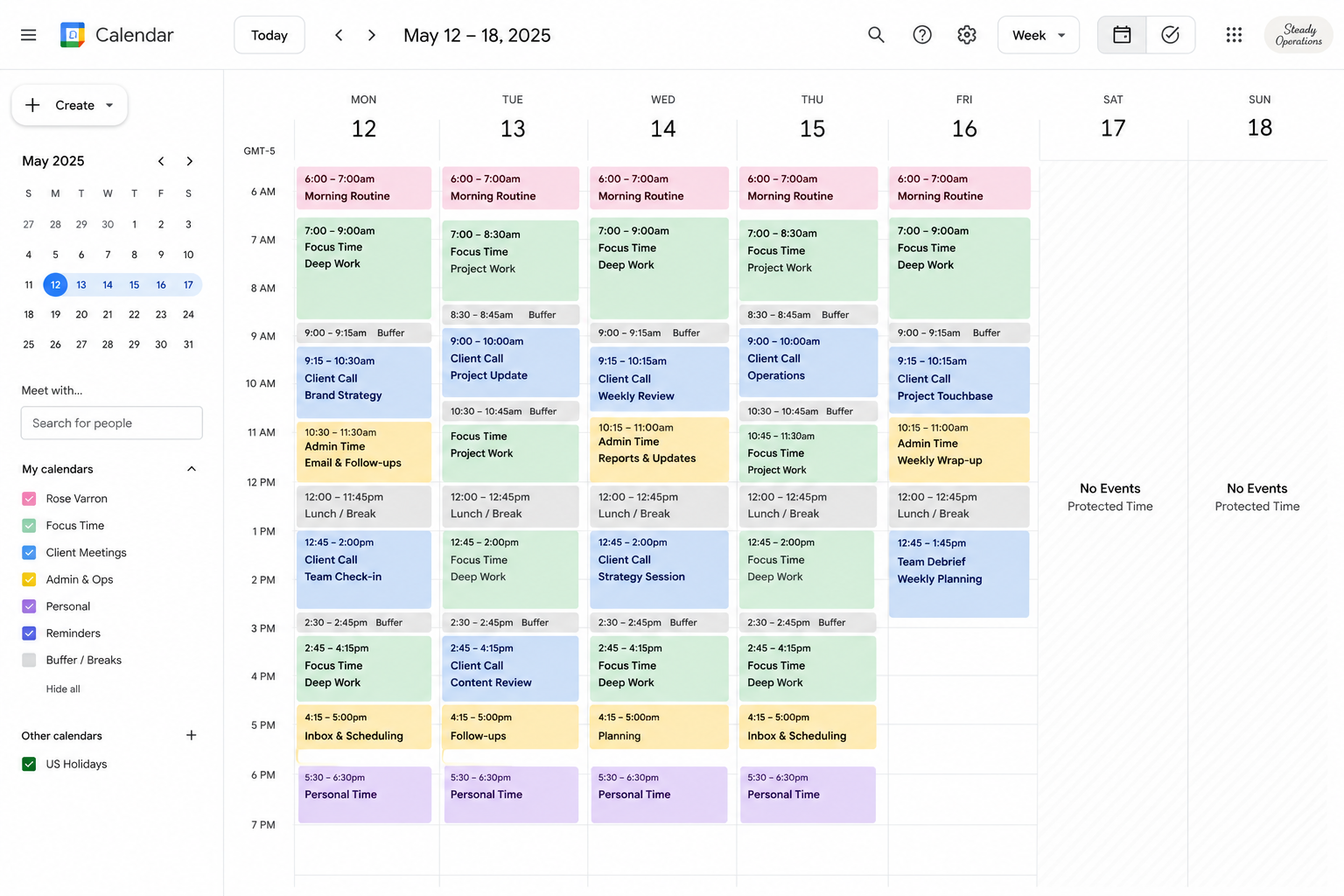
| No back-to-back meetings | Minimum 15-min buffer between any two calls | Recovery, notes, preparation time |
| Meeting-free mornings | No calls before 10 AM (unless client requests) | Protects morning deep work window |
| Meeting-free Fridays | Fridays reserved for wrap-up + planning | Weekly review, prep for next week |
| 30-min max for check-ins | Status calls capped at 30 minutes | Respects everyone's time |
| Agenda required | All meetings must have a shared agenda 24h before | Keeps meetings productive and skippable if not needed |
| Decline protocol | Unclear purpose meetings declined with a note | Protects calendar from bloat |
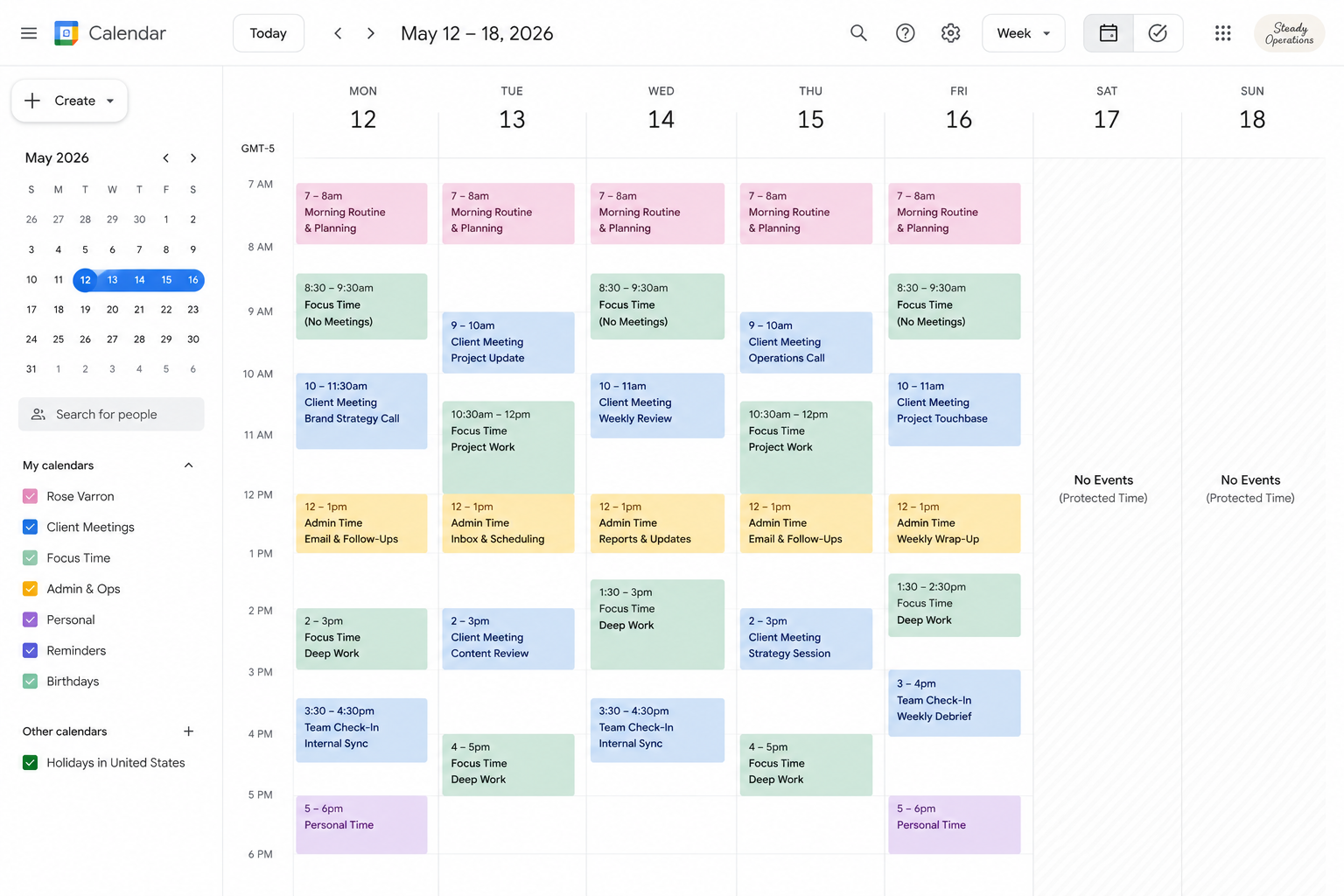
How a structured week is built
Each week is pre-built with intentional time blocks before external scheduling happens. These are non-negotiable unless the founder explicitly approves a change.
Before, during, and after every meeting
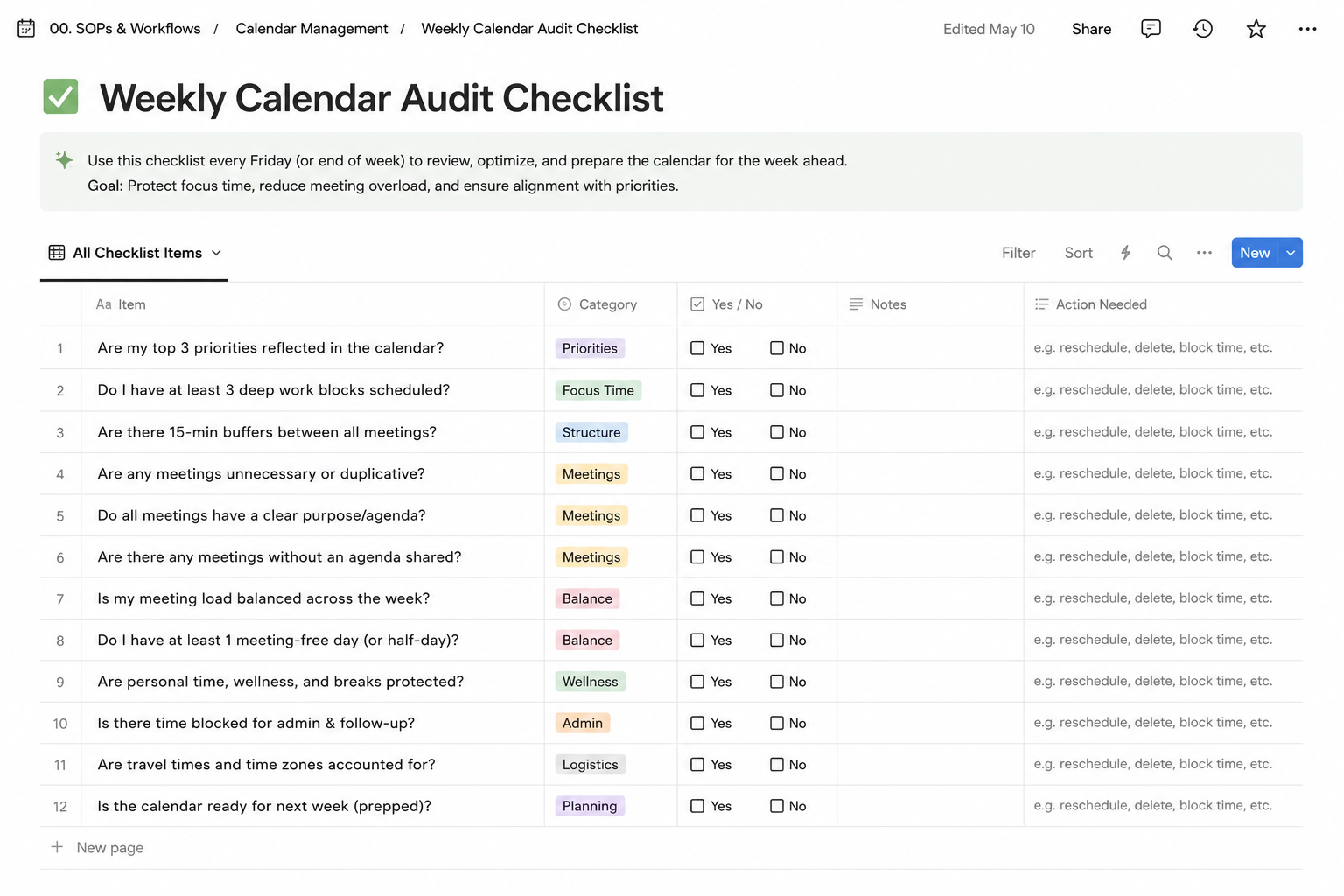
End-of-week calendar audit
Every Friday, Rose reviews the following week's calendar and makes proactive adjustments before the founder needs to think about it.